In brief
The Futuring 2036 guide is a free working document by DEN featuring four detailed future scenarios for the cultural sector. You use the scenarios and accompanying questions to determine with your team how your organization could look in 2036 and what you need to do today to achieve that. You can download it directly.
What is future exploration?
Futuring, or exploring the future, is a structured way to investigate possible futures and prepare your organization for them. You don't predict one future but work with multiple scenarios. This allows you to see which developments are coming your way and which choices remain viable, regardless of what happens. Organizations that actively think about possible futures are more agile and future-proof. Those who focus only on the present risk being overtaken by reality.
What is in the guide?
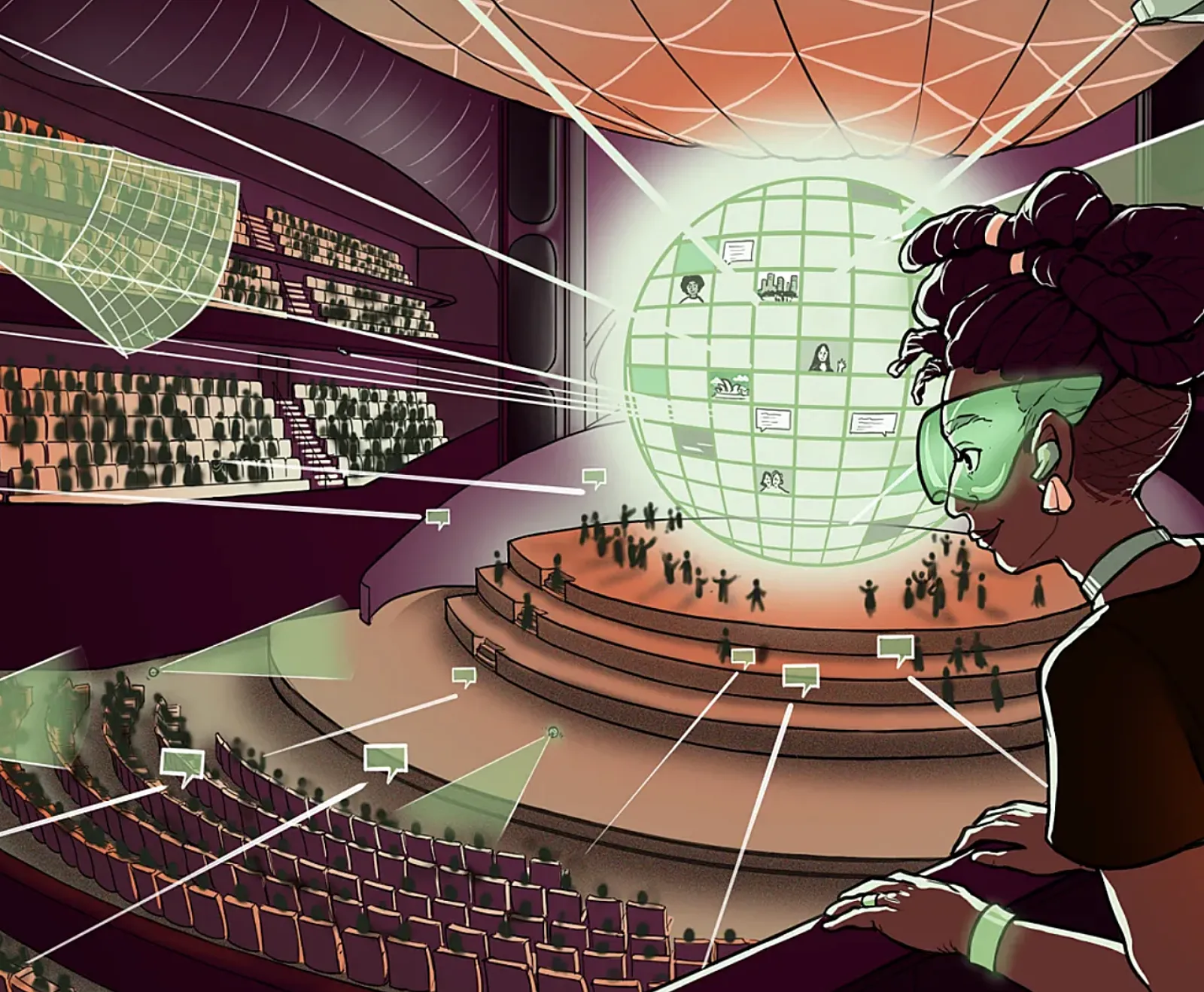
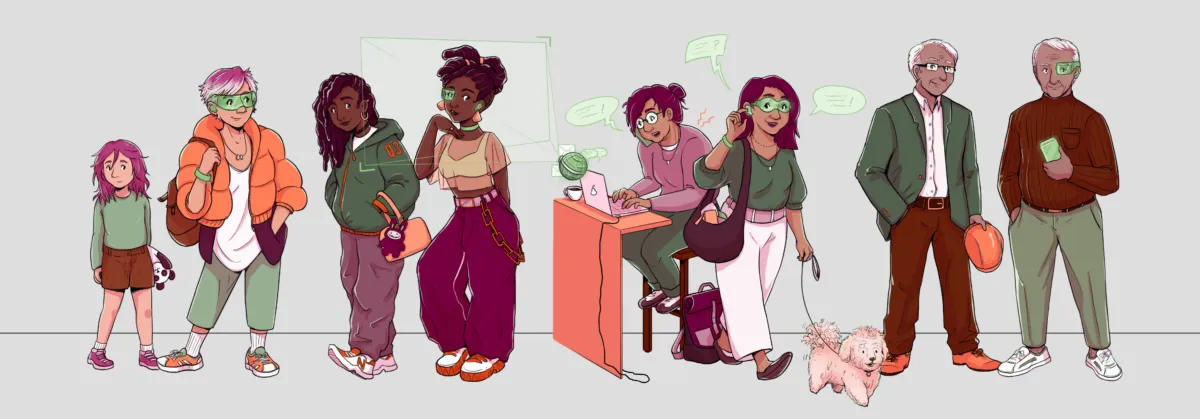
The guide takes you to the cultural landscape of 2036. DEN has elaborated two major uncertainties into four scenarios: the degree of technological innovation in the sector and the degree of ownership and participation by the audience. Each scenario shows how four generations, from Gen Alpha to Boomer, experience culture.
The four future scenarios:
Co-creative Culture Arena (high ownership, high innovation): everyone contributes, technology connects.
Directed Experience (low ownership, high innovation): everything is perfect, you watch, they decide.
Niche Makerspace (high ownership, low innovation): DIY, sharing together, low-tech.
Culture in Status Quo (low ownership, low innovation): organization broadcasts, remains classic, audience shrinks.
With four recognizable personas (Jezz (Gen A), Naomi (Gen Z), Maya (millennial), and Johan (boomer/Gen X)), you can see per scenario how different generations experience culture. This makes the future tangible and discussable.
How to get started?
The guide concludes with a set of questions that translate the scenarios into actions for today. You and your colleagues delve into each scenario, choose a desired future for your organization in 2036, and work back to the present (backcasting): what does this mean for your offerings, audience reach, staff, IT, and marketing in the coming years? Work with a diverse group, from management team to intern; future exploration works best when many perspectives come together.
The guide is an adaptation of an earlier DEN version from 2023, developed with futurist Freija van Duijne and supported by researcher Lauren Vargas. The scenarios are based on methodically monitored trends and signals; they remain tools, not definitive predictions.
Frequently Asked Questions
What is futuring?Hide explanationShow explanation
Futuring, also known as future exploration, is a method to investigate possible futures and prepare your organization for them. You don't predict one future but work with multiple scenarios, allowing you to make choices that remain viable. In the cultural sector, futuring helps organizations prepare for a changing audience and a more technological society.
What can I do with the Futuring guide?Hide explanationShow explanation
The guide contains four detailed future scenarios for the cultural sector in 2036 and a set of questions to apply them. You use it to explore with your team how your organization could look in the future and what steps you can take now. Downloading is free.
Who is the guide intended for?Hide explanationShow explanation
For anyone working in the cultural sector and involved in strategic decisions: from management and MT to policy, audience reach, and program staff at museums, theaters, archives, libraries, and festivals. It is best used with a diverse group of colleagues.
How much does the guide cost?Hide explanationShow explanation
Nothing. The Futuring 2036 guide is free to download.
How do I apply the scenarios to my organization?Hide explanationShow explanation
Delve into each of the four scenarios with your colleagues, choose a desired future for your organization in 2036, and work back to the present (backcasting). This way, you determine which choices you make now regarding offerings, audience, staff, IT, and marketing.
Better align with the audience of the future?
In the third season of the Cultuurshift podcast, we speak with a different international pioneer in culture and technology in each episode.
In episode 5, we dive into youth marketing and discuss how cultural institutions can connect with the world of a new generation.

More articles per topic