From travel agency to Airbnb
Do you remember? When you used to travel, you planned your trip through a travel agency. You would sit at a desk where an employee would present you with various guides featuring hotels and activities. How different things are now: consumers largely plan their trips independently, with input from influencers, online travel agencies, TripAdvisor, and the digital Lonely Planet. You book your accommodations and outings yourself via Booking.com, Airbnb, and other platforms. All the information you need for the perfect holiday is available online.
The experience economy: a product or service with a unique memory
In today’s experience economy, it’s no longer about offering a product or service but about creating a unique and memorable experience. Successful companies, such as Disney and Starbucks, focus on providing a special experience that sets them apart from the competition. Is the coffee at the latter chain really the best you’ve ever had? Or do you enjoy the fact that the barista writes your name just a little differently each time?
Cultural organizations operate in the same market: that of the optimal use of leisure time. Visitors constantly ask themselves how they can best spend their time. In a world full of competition, both online (Netflix) and offline (museums, theater), a physical experience must really offer something extra to stand out.
To attract potential visitors, it is crucial to emphasize the unique value of your offering. What makes your cultural experience special? To answer that question, a deep understanding of your target groups is essential. What motivates them to leave their couch? What experience do they find truly worthwhile?
Find inspiring examples of special experiences in the cultural sector in the DEN podcast Cultuurshift (opens in new tab).
The four E's of experience
Consumers are finding it increasingly less important to own things and increasingly more important to create and share their own personal memories. This is also interesting for the cultural sector: how do you respond to the emotional needs of visitors and give them a sense of satisfaction and connection?
Research shows that there are 4 categories of visitor experiences: entertainment, education, escapism, and aesthetics. Below we explain what these four categories entail. How can your organization use technology to add new dimensions to create more interaction with the visitor?

Entertainment
(The visitor has no influence on the experience and absorbs it)
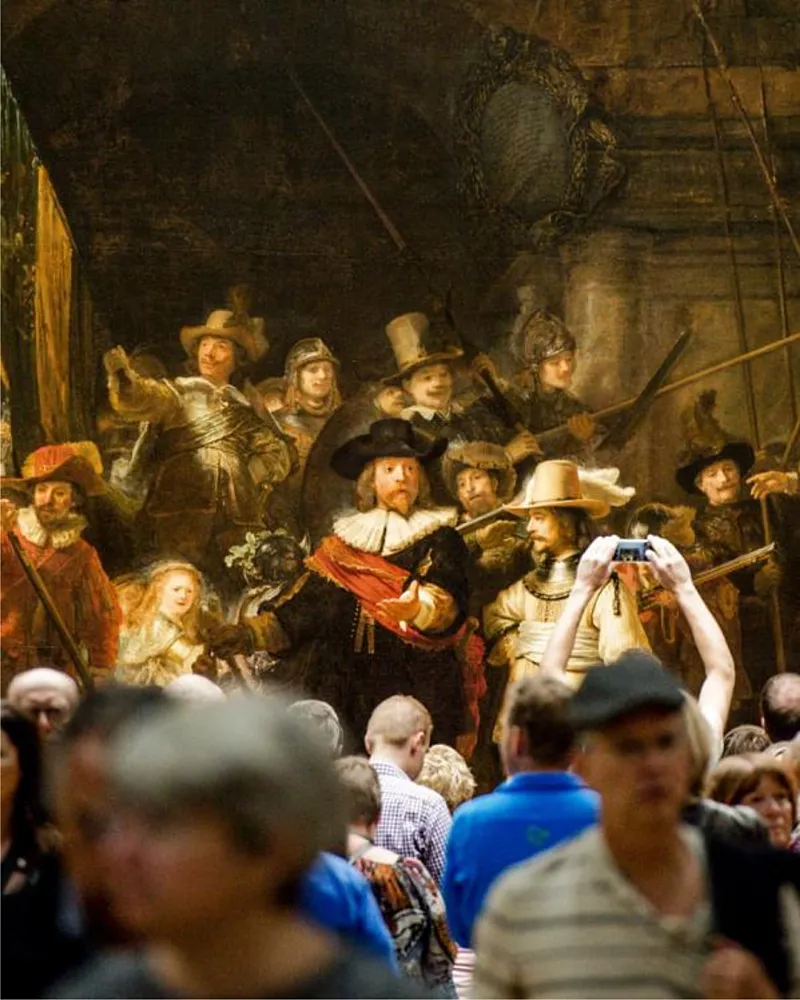
Some visitors want to be entertained. Think of the circus, the cinema, an exhibition, or a concert. Your visitor watches, listens, and experiences. This is mainly passive: your visitor becomes emotionally involved but doesn’t have to do much themselves.
This area has always had a lot of offerings. Think of theme parks, the Efteling, and the Keukenhof. However, in recent years, many new forms of offerings have emerged in this market. Think of Fabrique des Lumières as an addition to the museum offerings. Often, you are more immersed in the experience than with the original variant.
Education
(The visitor has influence on the experience and absorbs it)
In this form of experience, learning is central. The visitor plays an active role: they absorb new knowledge and skills. When you use technology for this, you get apps like Duolingo, where you learn a language in a playful way. Beautiful examples in the cultural sector are the marketing strategy developed by the Victoria & Albert Museum (opens in new tab) in England and the digitally designed lessons of the Huis van Gedichten (opens in new tab).
Escapism
(The visitor has influence on the experience and is part of it)
Some visitors want to completely immerse themselves in an experience, whether it’s virtual or physical. Often, a lot of adrenaline is involved, and the ordinary world seems very far away. You experience this, for example, at the Efteling, Holland Casino, or – taken even further – at the Fright Nights in Walibi.
There is also a lot of digital offerings in this area. Think of game halls, escape rooms, and the use of virtual and augmented reality. The latter is becoming increasingly common, for example, in zoos or even the theater. Punchdrunk and Studio Immersief, for instance, create a theatrical experience where visitors are free to choose what they want to see and where they want to go.
Immersive entertainment
It seems like an ordinary supermarket, but as soon as you step into Omega Mart in Las Vegas, you immediately see that you’re entering an artistic fantasy world. The emerging artist collective Meow Wolf (opens in new tab) from America creates crossovers between museums and amusement parks. Add gamification to that, such as RFID technology, and the term immersive entertainment even becomes an understatement.
Aesthetics
(The visitor has no influence on the experience but is part of it)
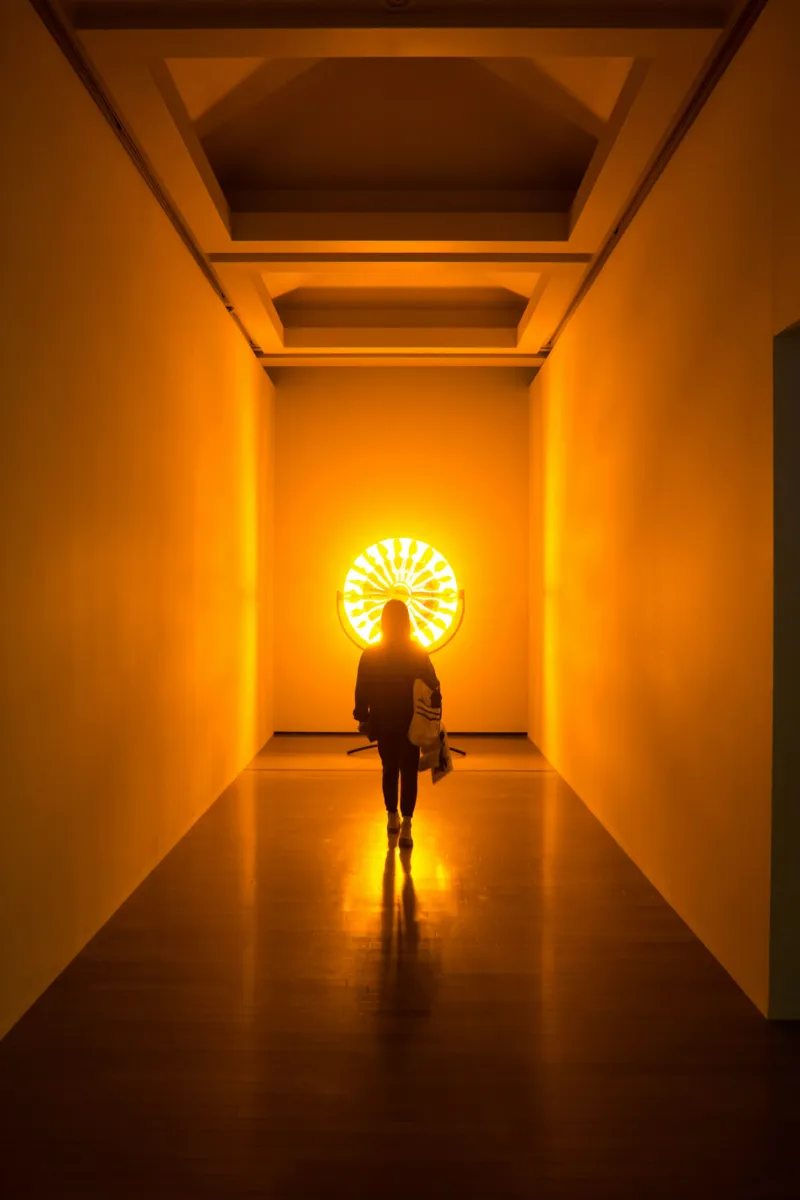
Those who go for the aesthetic experience want to feel. The visitor doesn’t influence the situation but undergoes the beauty of the moment. The environment plays an important role in this: the building, the interior, the lighting, and the presentation each play an important role. Think of the sleek design of the Apple Stores or, within the cultural sector, museum Voorlinden, Nxt Museum, Doloris, and WONDR. At many of these locations, technology plays an important role; the physical experience is enhanced with digital components.
Interactive museum
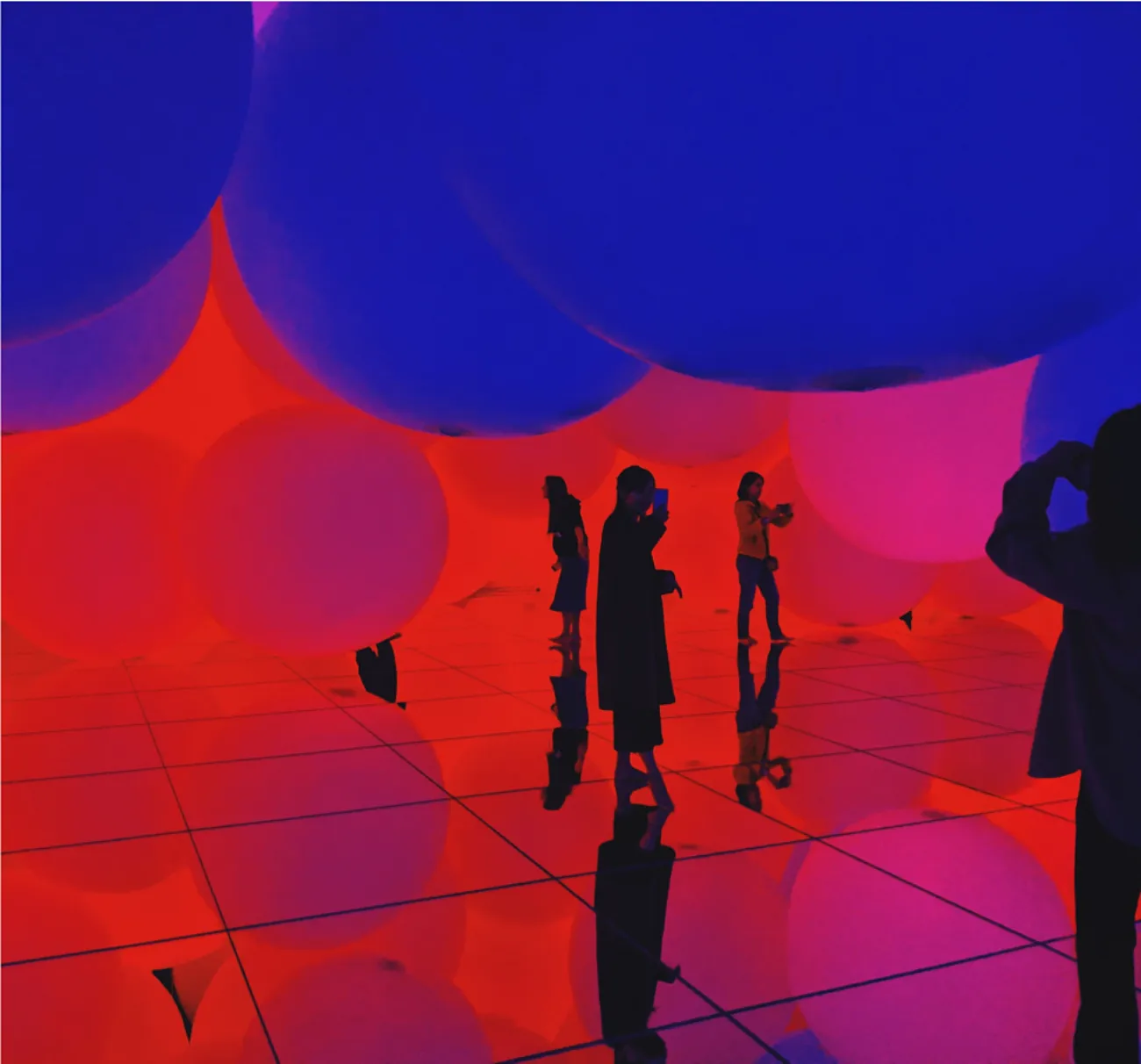
In the heart of Tokyo, TeamLab Borderless opened in early 2024, a museum that is very different from traditional museums. There’s no route, no map, and you have no idea what the artwork will look like. In fact, it’s different every quarter of an hour. This innovative museum with digital art is so different that it’s unique in the world. Learn more about this special experience in our podcast (opens in new tab).
Get started
How does your visitor experience your product? Which of the four categories above is your visitor looking for? And how do you use technology to create that experience? Discuss it together and step outside the beaten path.
Need help with your digital strategy?
When creating a digital strategy (opens in new tab), you reflect on this and make conscious choices. Do you already have a digital strategy? DEN offers e-learnings or in-company workshops (opens in new tab) to help you with this.
Author: Anne van den Dool
DEN Academy
Workshop digital strategy: start here!
You know that a digital strategy is necessary and you’d like to create one for your organization. Yet, in practice, it turns out to be more challenging than you thought: where do you start, and how do you approach it? Sign up for the in-company workshop Digital Strategy and set direction for your organization’s vision and ambition with your colleagues.
Masterclass 'Change management: leadership in digital transformations'
You want to take steps in your organization in the digital field. You already have a digital strategy or a clear vision of digital, but how do you involve your organization in this? How do you create support for new technologies and ways of working? Sign up for the masterclass Change Management.
Discover the latest digital trends in the cultural sector
Receive our newsletter with tips, knowledge, and inspiration about digital transformation in culture.

More articles per topic