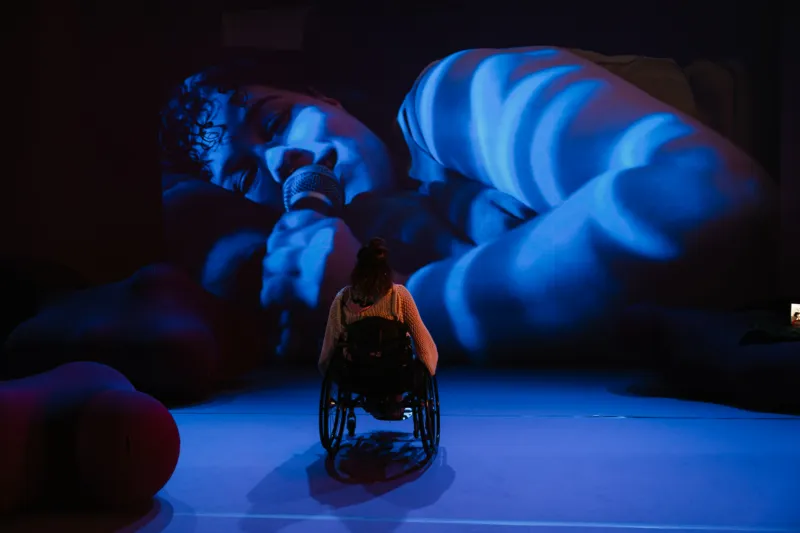
Digital accessibility in culture
For Martijn, the importance of digital inclusion became clear when a colleague was rehabilitating and met people who thought theater wasn’t for them due to a disability. “But that’s nonsense. You just need different conditions. With small digital and physical adjustments, you can make culture accessible to everyone.”
What do you learn from an accessibility test?
Martijn Westerop is a marketer at Het Nationale Theater and part of HNTOnbeperkt: the department committed to accessible theater. Since 2020, this department has been making performances accessible for people who are hard of hearing or deaf, visually impaired or blind, and for people with high sensitivity to stimuli. In the 2024-2025 theater season, they will offer 27 different performances aimed at one of the target groups of HNTOnbeperkt. They also began working on digital accessibility in 2020. Martijn had the theater’s website tested for accessibility. What was revealed? “There were all kinds of technical and content issues that we didn’t notice ourselves. For example, the search function for blind users was read incorrectly, greatly worsening the user experience.”
A few examples from the test results:
Buttons without labels (“undefined”)
Agenda that cannot be navigated using tab navigation
Forms that cannot be completed using a keyboard
These are not mere details; they are barriers that exclude visitors. Think of someone who cannot buy a ticket or find where the performance takes place. The website was made accessible at the time. Naturally, the site was further filled and developed in the following years.
Digital accessibility is never finished
The loyal audience now knows how to find the HNTOnbeperkt team well. For example, Martijn received feedback from blind visitors who couldn’t properly access certain information – particularly the prices.
This prompted Het Nationale Theater to conduct another accessibility test five years later. “New issues emerged again. That’s part of it. A website is always evolving,” says Martijn Westerop.
Ensuring that a website remains accessible requires structural attention. It’s a shared responsibility of content creators, marketers, web developers, and leaders.

Digital accessibility is not a technical detail – it is digital hospitality. Ensure your organization is ready for the future én accessible to everyone.
Why test for accessibility: the European Accessibility Act
From June 28, 2025, digital accessibility will be legally required. What does this mean for your cultural organization? Avoid fines én ensure everyone has access to culture – even online.
- Your website must be usable with screen readers and keyboard navigation
- Your online ticket platform must also be accessible to everyone
- Not mandatory, but helpful: Make your social media posts and digital communication accessible too

More articles per topic