
Did you know that only 16% of employees adopt new initiatives and methods without help? That means 84% do not!
It is therefore important to provide good guidance when introducing a new system. People need to see that it offers advantages, that its use is not as complicated as they think, and that it ultimately delivers more. Change management is a fundamental part of your digital project (opens in new tab).
Why start with change management
Change management is the point where you actively involve everyone who is in any way affected by the digital process: the so-called stakeholders. Here are a few examples:
- Management
- Product owner (project leader)
- Employees/teams
- IT/system administrator/security
- Legal department/privacy department (GDPR)
Involve these people in the conversation about the new initiative as early as possible.
Note. The interests of the organization may differ from those of the employees (and end users). While the latter prioritize user-friendliness, added value, and solving existing problems, the organization also has to deal with (strategic) organizational goals, costs, efficiency, and long-term objectives. It is important to determine the direction together. This is precisely why it is so important to align everyone's focus.
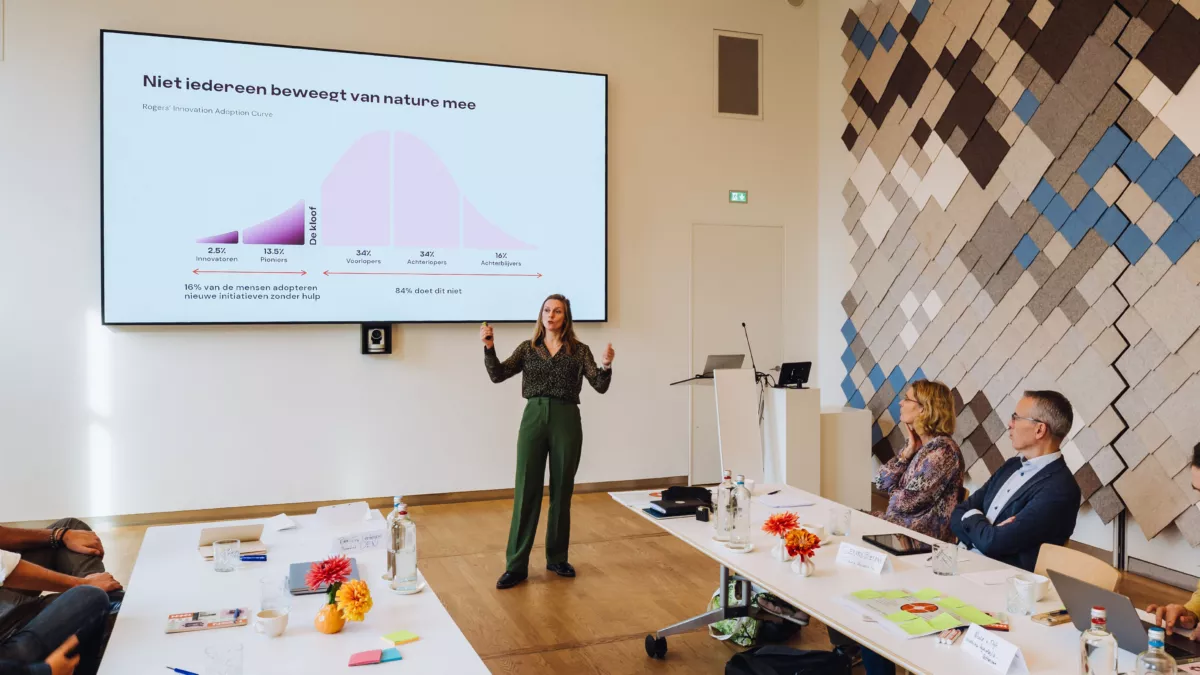
Put change management into practice
Do you want to not only understand how change works but also apply it yourself? During the workshop Change Management for Digital Projects (opens in new tab) on November 12, you will work with your own project case and learn how to involve your colleagues in the change.
You will receive practical tools to analyze change processes, recognize resistance, and create support. A few weeks later, during an online follow-up session, you will discuss your initial experiences and refine your approach further.
Are you a senior manager or director?
In the Masterclass Leadership (opens in new tab) in digital changes, your role as a leader takes center stage. You will learn how to guide change and involve teams in new technologies and methods.
How can change management help with adopting new practices?
Change management is about the behavioral change of each individual. It involves guiding the change to ensure that everyone wants and can embrace it. This requires various forms of communication, as well as guidance in applying a new method through different training formats.
Take your time, make agreements, provide guidance and training, use the right communication, and keep in mind that change is also an individual process.
How do you apply a change process?
- Take your time
Sometimes the project requires a new way of working from your colleagues. Devote a lot of time and attention to this and start early. Changing behavior is difficult, but not impossible. It helps to make it as easy as possible for your colleagues to adopt the new method. - Make work agreements
What solutions does the system offer, and what agreements need to be made? Write them down and discuss them with the users. - Guidance and training
What is changing and for whom? Ensure that this is clear so that you can provide good guidance and training to the users. - Ensure proper communication with end users
How do you communicate with the end users? Determine the best way to communicate with users, in meetings, via email, and/or through the manager. - Change is also mainly individual, keep that in mind
Change is not only a collective process; it is (especially) individual. Keep this in mind, including differences in disposition and personality. Is someone an early adopter or a late follower? Use, for example, the ADKAR theory (more on this later) to move everyone in your project toward the new method and situation.
What is the ADKAR theory, and how can it help with change processes?
To guide the change process (and make it easier for the group that does not easily 'adopt'), you can divide the process into phases. The ADKAR theory helps with this. The ADKAR theory comes from change management firm Prosci. It is a change theory that describes the phases of adoption: Awareness, Desire, Knowledge, Ability, and Reinforcement.
How does the ADKAR theory work exactly?
The ADKAR theory was developed by Prosci founder Jeff Hiatt, who wondered why some change processes succeed and others do not. After studying hundreds of these processes, he concluded that no matter how great the changes you envision, human acceptance and adoption determine the success.
The ADKAR theory focuses on the human side of change. What is needed to actually work structurally with a new product (in this case, a digital project)?
If you do not go through these phases, people will not understand why the project exists, they will not feel the desire to use it, they will lack (the need for) knowledge, they will not want/cannot become proficient in its use, or they will revert to old behavior.
By incorporating the following ADKAR phases into your project implementation, you consciously address all the steps a user must go through to ensure its success.
| ADKAR | Theory | Meaning | Tip |
| A | Awareness | "I know why" | Communicate about what is coming and 'why' this change is desired. |
| D | Desire | "I have the desire and will" | Determine the added value for the user. - engage in conversation |
| K | Knowledge | "I have the knowledge" | Provide tailored training. Ensure you know what will change for someone. |
| A | Ability | "I am capable" | Continue training and giving tips, possibly at the group level, to internalize the new method. |
| R | Reinforcement | "I keep doing it" | Encourage the new method and ensure that the old method is no longer supported. Hold each other accountable if it is still used. |
How do I apply the ADKAR model in my project?
The example project plan includes some elements of the ADKAR model. You can further develop this for your own project. Be aware that a change and project plan are best combined into one plan. You cannot have one without the other.

The human and technical side of projects
With each project, you want to change something; you move from the current way of working to a future method. The path to get there is called the 'transition.' You guide this transition by properly managing the project (technical side) and informing and training the people who will work differently (human side).
See the image below.
The success formula: the Change Triangle
According to Prosci, there is a kind of success formula for launching a project. This is called the Change Triangle. It is as follows (incidentally, ADKAR fits under point 4):
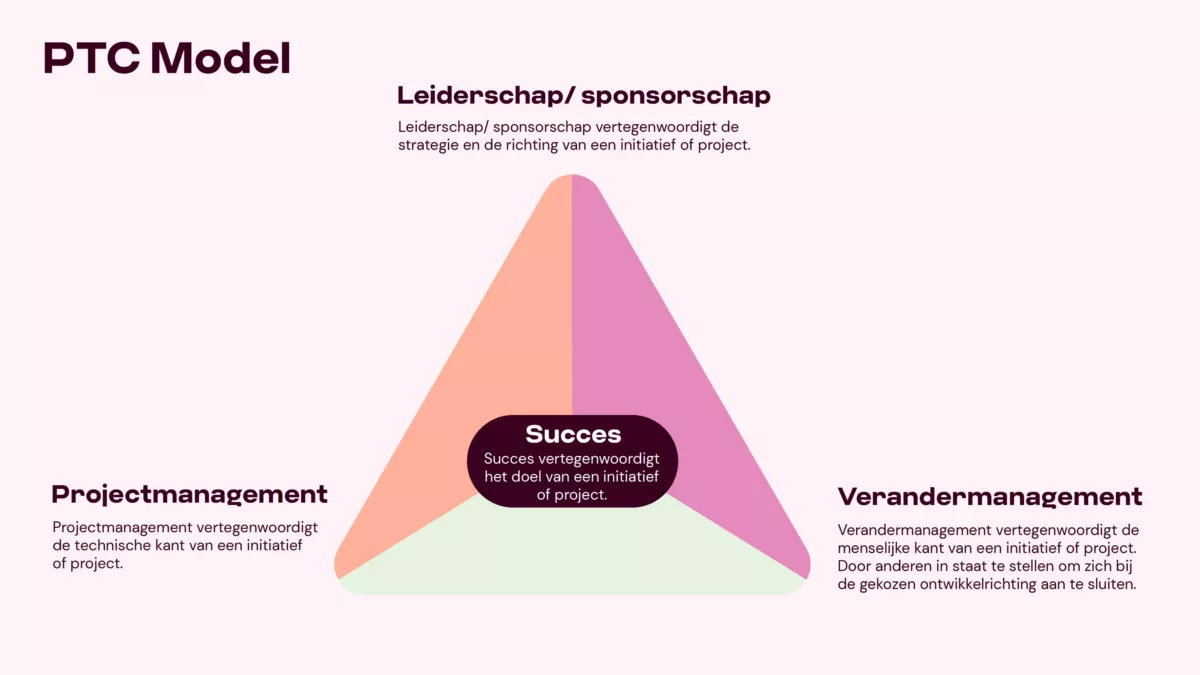
Digital projects therefore require not only a well-designed system but also attention to the people who will work with it.
An example of how to successfully guide your organization through a change? Read more in this article about how the Jewish Cultural Quarter approached this. (opens in new tab)
Frequently Asked Questions
What is change management in digital projects?Hide explanationShow explanation
Change management is the conscious guidance of the people who will work with a new digital system. It focuses on adoption, support, and dealing with resistance, alongside the technical aspects of the project. You involve stakeholders from the beginning and guide the transition to the new method.
Who do you involve in change management in a digital project?Hide explanationShow explanation
Involve everyone affected by the project as early as possible: management, the product owner, employees and teams, IT/system administration, and the legal or privacy department (GDPR, General Data Protection Regulation). Their interests do not always align, so it is important to determine the direction together.
What is the ADKAR theory?Hide explanationShow explanation
ADKAR is a change theory by Prosci, developed by founder Jeff Hiatt. The model describes five phases someone goes through during a successful change: Awareness, Desire, Knowledge, Ability, and Reinforcement. The theory focuses on the human side of change: this ultimately determines whether a digital project succeeds.
What is Prosci's Change Triangle?Hide explanationShow explanation
The Change Triangle is Prosci's success formula for launching a project: attention to the project itself, the people who will work with it, and the phases they go through, where ADKAR plays a role. This way, you combine the technical and human sides of a digital project.
Discover the latest digital trends in the cultural sector
Subscribe to our newsletter for tips, knowledge, and inspiration about digital transformation in culture.

More articles per topic



New(s) on DEN

AI is embraced faster than it is understood: how do you use it consciously?

Digital innovation, how do you start with a digital idea?

DEN x DigitALL Community Meet-up: step out of your comfort zone, reach new audiences with digital forms

How cybersecure is the cultural sector? Participate in our research