Personalized advice, specifically for the cultural sector
We answer short, practical questions about copyright in the digital domain and guide you in the right direction. For extensive legal cases, we refer to specialized parties.
Unlike a general legal desk, you’ll talk to someone who knows the cultural sector inside out. No waiting line, no thick dossier, just a short, practical answer from someone who understands what’s happening in museums, archives, theaters, and music venues.
Images & Collections
Can you display a photo or object from your collection online? What applies to digitization and publication of heritage materials?
Music & Digital Publication
Do you want to publish a music, dance, or theater production online? Then you’ll deal with both copyright (via BumaStemra) and neighboring rights of performers and labels (via Sena).
Quotation & Reuse
When can you quote or reuse someone else's work, and what about attribution and licenses?
Public Domain & Licenses
Is a work protected by copyright or rights-free? How do Creative Commons licenses work in practice?
Online & Social Media
What can you share on your website and social channels, and where are the boundaries for reusing content?
AI & Copyright
Can you train AI on or generate with work from your collection? What are the copyright implications of AI applications?
Questions you can bring to us
A selection of questions that have come to us before, purely for illustration, without ready-made answers. Every situation is different, so feel free to present your own question to us. Request a consultation. (opens in new tab)
"Can our marketing department share images on social media?"
"What to do with works still under copyright, but whose creator is deceased and no heirs can be found?"
"Who holds the copyright on donated materials, such as a photo?"
Unsure if your question is worth asking?
At work, you often encounter unexpected legal questions. Think of a photo you want to share, an unusual contract, or a new AI tool. Seeking help can feel like a hurdle. You might think: this is probably too small, or we’ll figure it out ourselves. You don’t need to first be sure if your question is "worth it"; that can be the very question you ask us.
We know the cultural sector inside out, and we see similar questions come up at many museums, archives, and theaters. Also, check out other knowledge and practical examples about copyright (opens in new tab) on DEN. We’re here for those quick questions in between.
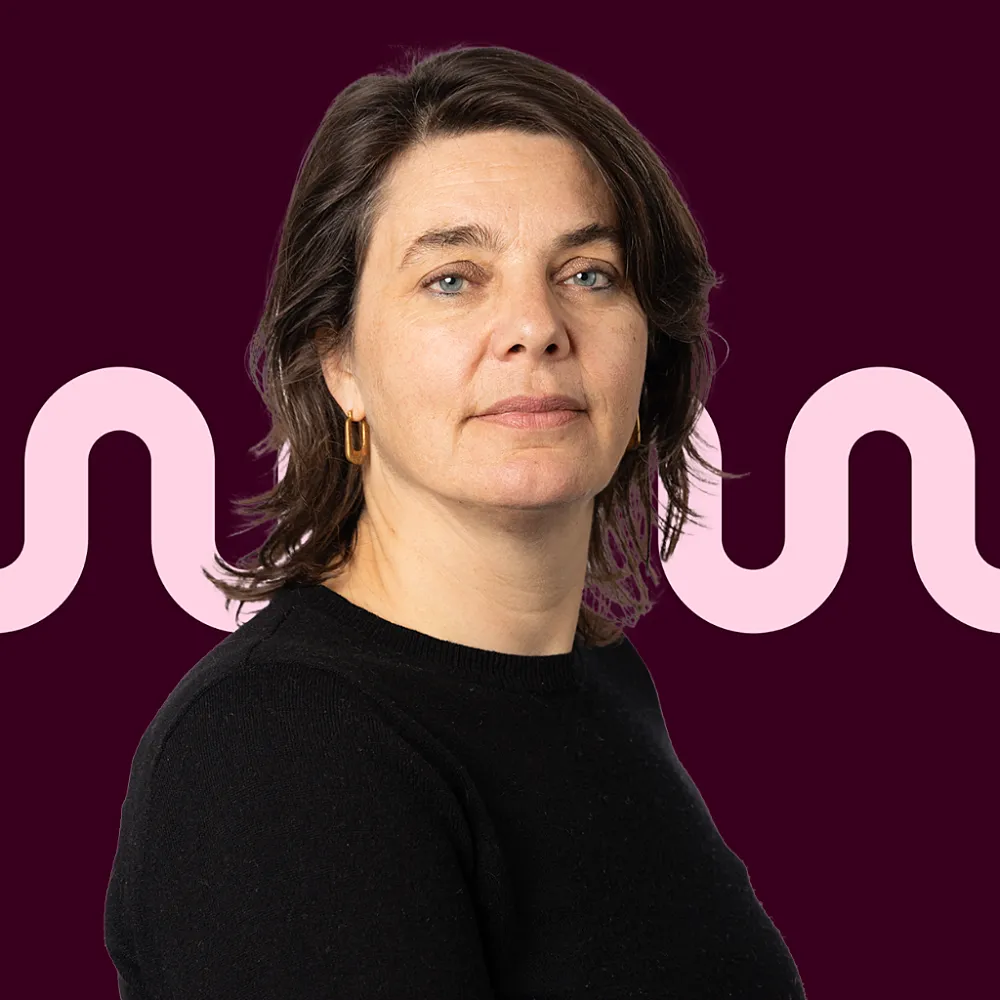
Who will you speak to?
Andrea Langendoen
Legal Advisor/Copyright Specialist at DEN
At DEN, Andrea focuses on the legal side of digital transformation in the cultural sector. Think of questions about digital reuse within performing arts, copyright, and the legal aspects of AI. She regularly shares her knowledge during DEN Talks and webinars about copyright and AI.
Additionally, Andrea has worked since 2019 as an independent project leader and (legal) advisor within the cultural sector. In this role, she has gained experience with the legal issues that arise in practice at many different cultural organizations.
Requesting a consultation
Do you have a question that can’t be answered in a few lines? Request a short consultation of 30 minutes. We usually get back to you within three working days. Advice is always provided within the framework of the DEN First-Line Legal Advice Regulations. (opens in new tab)
Here’s how it works:
Fill out the form with your question and contact details.
After filling out, you’ll receive an email to directly schedule a consultation.
We assess your question and determine whether it can be answered in writing or requires a consultation.
Andrea will let you know whether the scheduled consultation will proceed or if you’ll receive a written answer.
Is additional expertise needed? Then we’ll refer you to the appropriate party.
Frequently Asked Questions

Can I publish objects from our collection online?
That depends on the copyright status of the work. Works by creators who passed away more than 70 years ago usually no longer have copyright; they are in the public domain. For more recent works, you typically need permission from the rights holder, even if the physical object is in your possession. Ownership of an object and copyright on it are two different things. We are happy to help you determine which category your material falls into.
What is the difference between ownership and copyright?
If you have a painting, photo, or letter in your collection, you are the owner of the physical object. The copyright, the right to reproduce and disclose the work, remains with the creator or their heirs, up to 70 years after the creator's death. For online publication or reproduction, separate permission is often required, regardless of who owns the object.
How do I know if a work is in the public domain?
The general rule is that copyright expires 70 years after the creator's death. A work from 1900 by a creator who died in 1945 has been in the public domain since 2016. Note: for works with multiple creators, the longest-living creator counts, and for photography and reissues, separate rules may apply. Unsure? Submit your question to us with as much information about the creator and year as possible.
Can I cite others' work in a publication or exhibition?
The citation right allows protected works to be used without permission, provided certain conditions are met: the citation serves a purpose such as announcement, critique, or scientific discussion; the work has been lawfully disclosed; the citation is proportional (no more than necessary); and you credit the source and creator. Whether your use falls under citation right depends on the context, which we are happy to review with you.
What does a Creative Commons license entail?
Creative Commons (CC) is a set of standard licenses that allow creators to specify in advance what others can do with their work. Depending on the license, you may share and edit the work, provided you credit the creator (BY), use it non-commercially (NC), or share it under the same conditions (SA). It’s a convenient way to make your own material available and safely manage reuse of others' work. Always check which specific license applies.
Do I need to pay for music when publishing a production online?
Yes, usually. For online (re)use of music, you deal with two types of rights: the copyright of the composer and lyricist (handled via BumaStemra) and the neighboring rights of performers and record labels (handled via Sena). BumaStemra has agreements with platforms like YouTube and Spotify for the copyright aspect, but neighboring rights often need to be arranged separately—and that can take time. We help you figure out which parties are relevant in your situation.